
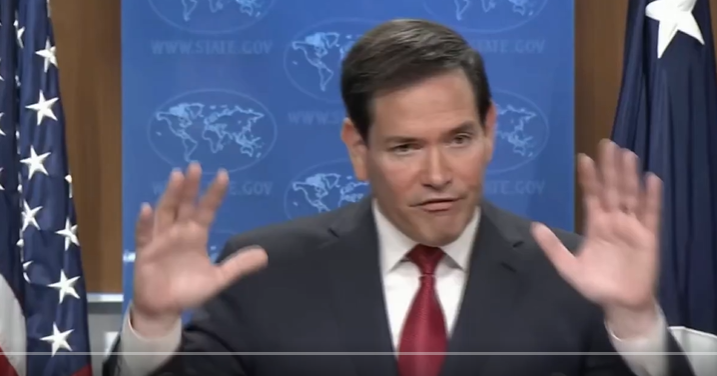
Secretary of State Marco Rubio just froze the assets and slapped travel bans on ICC President Tomoko Akane and Senior Trial Lawyer Abdoulaye Seye. Not a press release expressing concern. Not a diplomatic memo sent through back channels. Actual sanctions — the kind that lock you out of the American financial system.
The International Criminal Court just found out what happens when you come for American sovereignty and the adults are home.
The ICC, established in 2002, claims jurisdiction over roughly 125 member states. The United States is not one of them. Never has been. That distinction hasn't stopped the court from repeatedly attempting to assert authority over American nationals, most notably through its investigation into U.S. actions in Afghanistan. It also hasn't stopped ICC Prosecutor Karim Khan from issuing arrest warrants in November 2024 against Israeli Prime Minister Benjamin Netanyahu and former Israeli Defense Minister Yoav Gallant over the Gaza conflict.
Rubio laid out the administration's position with the kind of clarity we don't usually get from Foggy Bottom. "The Trump Administration is sanctioning ICC President Tomoko Akane and Senior Trial Lawyer Abdoulaye Seye in our unwavering mission to protect Americans from this sham of a court," he said.
He went further. "Last month, I launched a diplomatic campaign to dismantle the ICC's threat to our national sovereignty." And then, reaching back to the founding documents for a flourish: "In honor of our Declaration of Independence, Americans will never be transported beyond seas to be tried for pretend offenses."
The sanctions themselves include asset freezes, travel bans, and restrictions on access to the U.S. financial system. For a court that depends on international cooperation to function, getting cut off from the world's reserve currency is not a minor inconvenience. It's a structural problem.
The usual international law crowd will cry about "norms" and "multilateral institutions." Interesting framing for a court that claims the power to prosecute citizens of countries that never signed its founding treaty. The ICC has repeatedly attempted to assert authority over nationals of the United States and other countries that have not consented to its jurisdiction — Rubio's words, and also just a plain statement of fact.
"Our whole of government campaign to dismantle the threat posed by the ICC to national sovereignty will be sweeping," Rubio added.
For decades, the American posture toward international bodies that overreach has been some version of polite disagreement followed by continued funding. The Trump administration appears to have skipped ahead to consequences. A court that tries to haul Americans before foreign judges for "pretend offenses" gets treated like the threat it is — not the institution it pretends to be.
The ICC still has roughly 125 member states to boss around. The United States just isn't going to be one of them.