
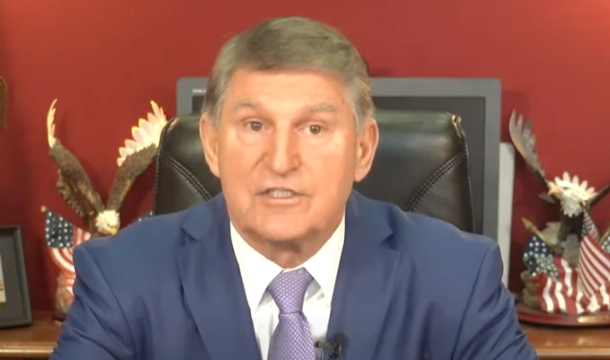
Joe Manchin, the former West Virginia senator who spent fifteen years as the Democratic Party's favorite prop for bipartisan photo-ops, just publicly endorsed not one but two Republican Senate candidates. Susan Collins in Maine. Mike Rogers in Michigan. Two separate races, two separate states, one unmistakable message.
The man who caucused with Democrats from 2010 to 2025 is now actively recruiting for the other team.
Manchin didn't offer one of those mealy-mouthed "I respect candidates on both sides" non-answers that retired politicians use to stay on every Christmas card list in Washington. He went specific. On Collins, Manchin said, "You lose the Susan Collins of the Senate, you're losing the soul of the Senate. Basically, a person you can talk to, wants to do the right thing all the time." That's not a polite nod across the aisle. That's a full-throated endorsement wrapped in a eulogy for everything the Democratic caucus used to pretend it valued.
On Rogers, the Republican running for Michigan's open Senate seat, Manchin was even more direct. "I do support Mike Rogers. I think Mike Rogers is a good person. I think he'll do a great job." No qualifiers. No "but I also wish the Democrat well." Just a clean, declarative statement that the Republican is the better candidate in a state Democrats desperately need to hold.
Michigan matters here. Donald Trump carried the state and its 15 electoral votes in 2024. Gary Peters, the Democratic incumbent, isn't seeking reelection. The Democratic nominee is Abdul El-Sayed, who has to thread the needle of holding together a coalition that includes both the progressive wing — your Bernie Sanders and Alexandria Ocasio-Cortez enthusiasts — and whatever's left of the moderate Democratic voter who still remembers what a centrist sounds like. Manchin just told that second group to vote Republican.
This puts Democrats in a position where their own former senator is actively undermining their midterm strategy. Michigan was supposed to be competitive but winnable. A Manchin endorsement of Rogers hands the GOP a crossover credibility card that no amount of campaign spending can replicate. You can't buy a former Democratic senator telling swing voters that the Republican "will do a great job." That kind of validation has to be earned — or, more accurately, the other party has to lose it.
The Democratic response has been roughly what you'd expect: ignore it and hope nobody notices. No major Democratic figure has addressed the endorsement directly. Governor Gretchen Whitmer hasn't commented. The party apparatus is treating Manchin like the uncle who switched his voter registration at Thanksgiving — technically still family, but nobody's passing him the potatoes.
The problem with the silent treatment is that it confirms the diagnosis. If Manchin's endorsements were meaningless — if he were truly just a cranky independent with no constituency — Democrats would laugh it off publicly. They're not laughing because they know exactly which voters listen to Joe Manchin: the blue-collar, union-adjacent, culturally moderate voters who used to be the foundation of the Democratic Party before the party decided those people were embarrassing.
Manchin's trajectory tells a story that Democrats would rather not narrate. He didn't wake up one morning and decide Republicans were great. He spent years watching his own party drift toward positions that made him unelectable in West Virginia — a state Democrats held for decades before they decided coal miners were the enemy. He left the party. Then he left the Senate. Now he's actively working against Democratic candidates in competitive races. That's not a personality quirk. That's a trend line.
The broader pattern is hard to miss. Senator John Fetterman of Pennsylvania has been making noises about the party leaving him behind. Moderates across the country are being told to either embrace the progressive platform or get out. Manchin got out. And he took his endorsement with him.
The "big tent" theory of Democratic politics required one thing above all else: that people who disagreed with the party's direction would at least stay quiet. Manchin was supposed to retire gracefully, do some lobbying, maybe write a memoir nobody reads. Instead he's on the record backing Republicans in two races that could determine Senate control.
Democrats spent fifteen years using Manchin as proof they weren't a coastal progressive party. He voted with them when it counted. He gave them the majority. He took the heat from the left so the caucus could pretend it had range.
Now he's giving that range to the GOP. And the tent looks a lot smaller from the outside.