
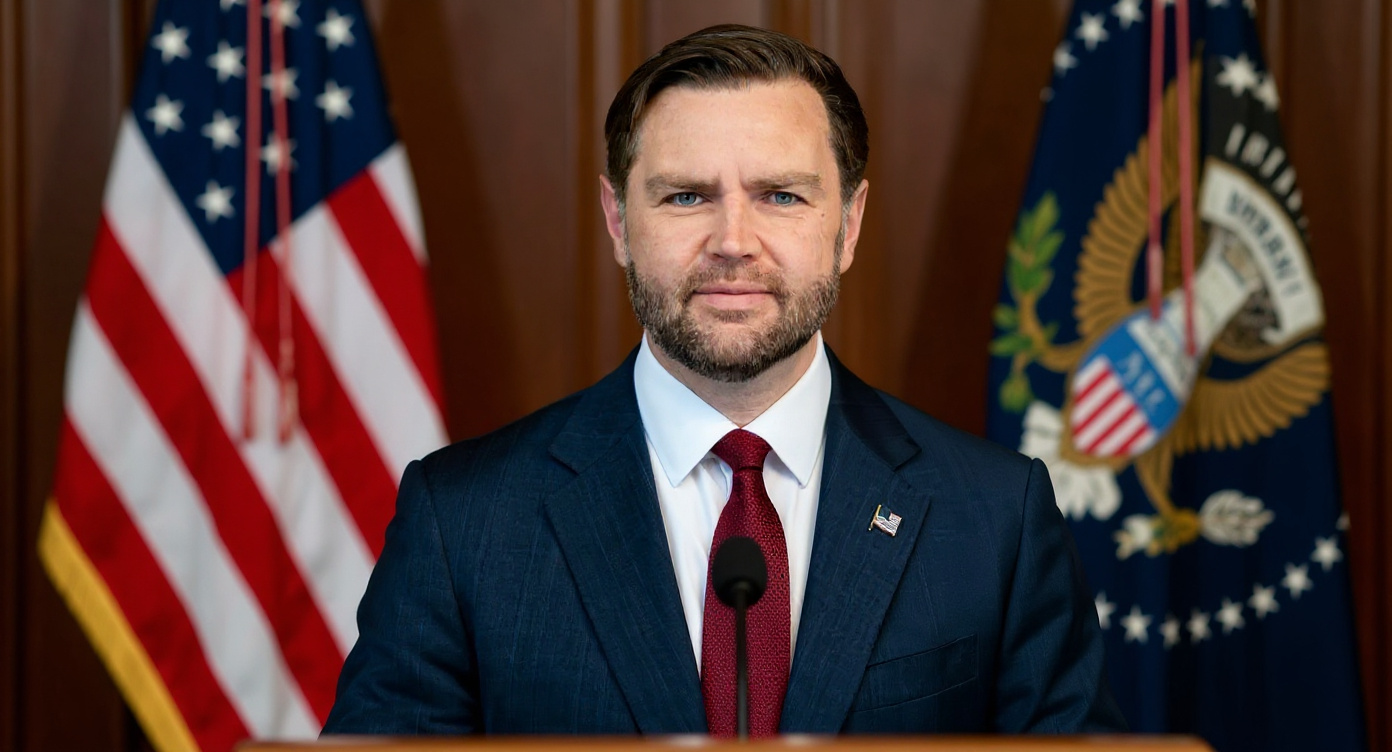
Vice President JD Vance stood before reporters Thursday and laid out the difference between Barack Obama's Iran nuclear deal and the Memorandum of Understanding signed by the Trump administration at the Palace of Versailles on Wednesday evening. He did it in plain language. The comparison was not close.
Vance started with the foundational difference in approach. Obama's strategy, as Vance described it: "You already have a really nice nuclear program; we're going to bribe you with American money in order to stop it." The Trump strategy, in seven words: "We already destroyed your nuclear program." One administration arrived at the negotiating table with a checkbook. The other arrived after the military and economic work had already been done — which is why the terms of the two agreements look nothing alike.
On enrichment — the capability that determines whether a regime can build a bomb — the contrast is categorical. The Obama deal, the JCPOA, allowed Iran to continue enriching uranium up to 3.67 percent. That level is described as civilian use, but it preserves the full enrichment infrastructure: the centrifuges, the technical expertise, the processing facilities. Once a country has that infrastructure, moving from 3.67 percent to weapons-grade — 90 percent — is a shorter step than building the capability from scratch. Iran had already demonstrated it could enrich to 60 percent before sitting down at Versailles. The Trump deal, per Vance, will not allow enrichment. Not a reduced level with conditions attached. Zero.
The Obama deal's sunset clauses deserve their own mention. Key restrictions on Iran's nuclear activity were written to expire in 8 to 15 years. Iran didn't have to defeat the JCPOA — it only had to wait it out. By 2030, many of the deal's core limitations were scheduled to lift automatically, after which Iran could legally resume full-scale nuclear activity under the terms of the agreement that was supposed to prevent it. The Trump deal is structured around permanent elimination of the capability, not temporary restriction with an expiration date.
On stockpiles: the Obama deal "allowed the accumulation of stockpiled weapons-grade material." Iran retained enriched uranium under that framework and grew its stockpile steadily. By the time the current negotiations began, Iran had accumulated uranium enriched to 60 percent — close enough to weapons-grade that nuclear analysts were measuring Iran's breakout time in weeks, not months. The Trump deal, Vance said, is "leading to the destruction of that stockpile of enriched material." One agreement let Iran accumulate the material needed for a weapon. The other is eliminating it.
Then there's the money. The Obama administration released approximately $1.7 billion in frozen assets to Iran as part of the JCPOA negotiations — including $400 million in cash, flown on cargo planes and delivered in foreign currency to avoid U.S. banking restrictions. This went to a regime that sponsors Hezbollah, funds Hamas, and has armed militias responsible for killing American soldiers. Vance's description of the Trump deal's financial terms was brief: it "gives them $0 of American money."
The $300 billion reconstruction framework referenced in the broader agreement is not American money either. That figure represents a multilateral economic development commitment funded by Gulf state partners — Saudi Arabia, the UAE, Qatar, and their neighbors — who have their own strategic interest in a stable Iran and the sovereign wealth to fund it. The United States Treasury is not involved.
What the Trump administration brought to Versailles was leverage of a different kind — not a diplomatic theory about what Iran might do if treated as a good-faith partner, but a position in which Iran's nuclear program had been materially set back and its economy had been under sustained maximum pressure. Vance called this negotiating "from a position of strength." The terms reflect it. Iran is committing to zero enrichment, destruction of its weapons-grade stockpile, and IAEA monitoring — concessions it never made under the JCPOA — in exchange for sanctions relief that remains contingent on compliance. Iran gets nothing until it delivers.
The Obama deal allowed enrichment. It allowed stockpiling. It paid Iran $1.7 billion. It had expiration dates on its most critical provisions. And it was signed before Iran surrendered a single centrifuge.
The Trump deal costs the United States nothing, requires Iran to surrender the enrichment capability it spent decades building, and destroys the stockpile that was weeks from being weapons-usable.
The last time something this consequential was negotiated at Versailles, it ended a World War. Vance's point on Thursday was simpler: you don't need to bribe a country out of a nuclear program you've already dismantled. You just need to make sure they stay out.